For many CPA firms, growth does not come from a lack of client demand. It is often constrained by capacity.
As firms take on more audit engagements, expand tax services, or support clients across jurisdictions, the pressure on internal teams increases. Peak periods such as audit cycles and tax seasons amplify this challenge.
The question many CPA partners face is not whether there is enough work, but whether their firm has the operational capacity to deliver consistently without compromising quality.
At the same time, the accounting profession is evolving. Automation tools and AI-assisted platforms are improving efficiency in areas such as document processing, data extraction, and preliminary analysis. However, these advancements do not eliminate the need for structured workflows, experienced professionals, and review discipline.
In this environment, many CPA firms are rethinking how their delivery models are structured.
One approach that has gained significant traction is the use of offshore teams to support audit and tax workflows.

Audit cycles bring a predictable surge in workload.
Firms must manage:
These activities require both time and precision.
Even well-staffed firms often experience strain during peak periods. Internal teams may be required to work extended hours, increasing the risk of fatigue and errors.
While automation tools can assist in organizing and processing data, they do not remove the need for human validation, judgment, and structured review processes.
This creates a recurring challenge: how to manage workload spikes without permanently increasing headcount.
Recruiting and retaining qualified accounting professionals has become increasingly difficult.
Firms often face:
These challenges can slow down delivery and affect client service quality.
Additionally, as accounting workflows evolve to include cloud platforms and AI-assisted tools, firms need professionals who can operate across both traditional accounting practices and modern digital systems.
Building such teams internally can take significant time and investment.
A substantial portion of audit work involves preparing structured workpapers and maintaining clear documentation.
This includes:
These tasks require consistency and attention to detail.
While AI tools can assist in extracting data and organizing documents, workpaper preparation still depends heavily on structured processes and professional oversight.
Without proper workflows, inconsistencies can arise, making review stages more time-consuming.
Tax season introduces its own set of complexities.
CPA firms must manage:
Accuracy is critical, and timelines are often compressed.
Automation tools can assist in data handling and preliminary calculations. However, interpretation of tax regulations, handling of exceptions, and final review decisions require experienced professionals.
Maintaining efficiency without compromising compliance becomes a key operational priority.
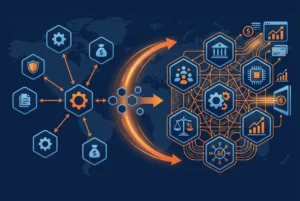
To address these challenges, many CPA firms are integrating offshore teams into their workflows.
Offshore support does not replace internal teams. Instead, it extends the firm’s capacity by handling structured, process-driven components of audit and tax work.
Offshore teams can assist with:
By handling these structured tasks, offshore teams allow onshore professionals to focus on:
This improves overall efficiency while maintaining quality standards.
For tax workflows, offshore teams can support:
Internal teams can then focus on:
This division of responsibilities helps firms manage high volumes during tax season without overloading internal resources.
One of the critical elements of successful offshore integration is a well-defined review structure.
A typical workflow may include:
This layered approach ensures:
AI tools may assist in identifying anomalies or inconsistencies, but final validation remains a professional responsibility.
Structured review hierarchies help maintain audit quality and compliance standards.
Modern CPA firms are increasingly adopting cloud accounting systems and AI-assisted tools.
These technologies can:
However, technology is most effective when integrated into well-defined operational frameworks.
Offshore teams often work within these systems, using shared platforms to maintain transparency and collaboration.
This allows firms to combine:
into a cohesive delivery model.
The shift toward offshore support is not only about cost efficiency. It reflects a broader need for scalable, flexible, and reliable delivery models.
Key benefits include:
When structured correctly, offshore teams function as an extension of the firm, supporting both operational efficiency and client service quality.
The success of offshore models depends on how they are implemented.
At Ayvya Consulting, we believe that CPA support should be built on:
This ensures that offshore teams contribute not just capacity, but consistency and reliability.
Technology and AI tools can enhance efficiency, but governance ensures that outputs remain accurate, compliant, and review-ready.
As CPA firms grow, the ability to manage audit and tax workloads efficiently becomes a competitive advantage.
Firms that combine:
are better positioned to handle increasing client demand while maintaining quality standards.
For many firms, this approach provides a practical path to scaling operations without overextending internal teams.
As CPA firms navigate increasing workloads, evolving technology, and rising client expectations, many are re-evaluating how audit and tax operations should be structured.
In our experience, the most effective models combine professional expertise, structured workflows, and technology-enabled efficiency. Offshore teams, when integrated with clear governance and review frameworks, can support scalable delivery without compromising quality.
At Ayvya Consulting, we work with CPA firms to design offshore support models that align with audit standards, tax workflows, and firm-specific processes.
For firms exploring how to expand capacity while maintaining control, taking a structured approach early can create long-term operational clarity.
In the next article, we will explore how GCC and Nano GCC models are enabling firms to build more structured offshore capabilities with long-term operational alignment.








Kiara Foster
Head of Content
Kiara
Edit this chat template from WP Admin > Templates > Floating Elements
Powered by Elementor