As startups, SMEs, and CPA firms expand globally, building a team in India has become a strategic priority.
India offers access to skilled professionals, cost efficiency, and the ability to scale operations across functions such as finance, analytics, and technology.
However, one critical question arises early in this journey:
What is the right model to build and manage an India-based team?
Two commonly considered approaches are:
At first glance, both models enable companies to establish a presence in India without setting up a full legal entity. But in practice, they serve very different purposes.
Understanding these differences is essential for making a decision that aligns with long-term business goals.
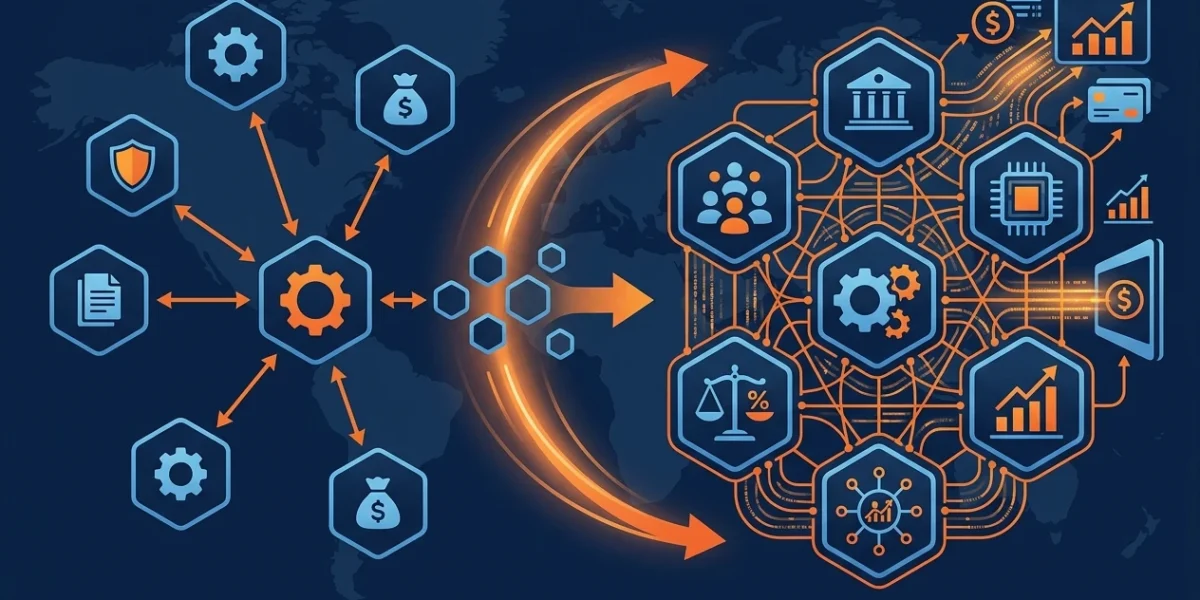
An Employer of Record (EOR) is a service provider that legally employs staff on behalf of a company in a foreign country.
In this model:
EOR is commonly used for:
It offers speed and simplicity, especially in the early stages of expansion.
A Nano Global Capability Center (Nano GCC) is a structured offshore capability model designed for organizations that require more than just hiring support.
It is:
Unlike EOR, a Nano GCC focuses on building operational capability, not just employment.
It combines:
to create a more stable and scalable offshore model.
While both models support India expansion, their objectives differ.
Aspect | EOR | Nano GCC |
Primary Purpose | Hiring and compliance | Building operational capability |
Control | Moderate | High |
Process Alignment | Limited | Strong |
Scalability | Limited | Designed for growth |
Governance | Minimal | Structured |
Best Use Case | Short-term hiring | Long-term operations |
This step defines whether the GCC will focus on finance, analytics, technology, or a combination of functions.
EOR is useful in specific scenarios.
When a company needs to hire a few employees quickly, without setting up infrastructure.
When the business is exploring India but is not yet ready to commit to long-term operations.
For isolated roles that do not require deep integration with company workflows.
As organizations grow, certain limitations of EOR become more visible.
EOR focuses on employment, not operational workflows. Teams may lack standardized processes.
There is minimal built-in structure for review, reporting, or performance management.
As team size increases, coordination and alignment become more complex.
EOR teams may operate as extensions of individuals rather than as a cohesive unit aligned with company objectives.
For organizations moving beyond initial hiring, Nano GCC offers a more structured alternative.
It is particularly relevant for:
Nano GCC enables organizations to build:
This allows offshore teams to function as integrated extensions of the organization, rather than independent hires.
One of the defining features of Nano GCC is governance.
At Ayvya Consulting, Nano GCCs are built with:
AI and automation tools can improve efficiency, but governance ensures that outputs remain consistent, compliant, and decision-ready.
Nano GCCs are designed to scale in stages.
Organizations can move from:
This staged approach allows companies to grow without overcommitting resources.
AI and automation are influencing both EOR and Nano GCC models.
They can:
However, AI does not replace:
Nano GCC models are better positioned to integrate AI within controlled and scalable environments.
The choice between EOR and Nano GCC depends on business objectives.
If the goal is:
If the goal is:
then Nano GCC becomes more relevant.
Many organizations begin with EOR and later transition to more structured models.
In our experience, evaluating long-term needs early can help avoid:
A structured approach from the beginning often leads to more stable growth.
As startups, SMEs, and CPA firms evaluate how to build teams in India, the focus is shifting toward creating structured, scalable, and well-governed offshore operations.
In our experience, while EOR can support quick market entry, Nano GCC models provide a stronger foundation for long-term capability building.
At Ayvya Consulting, we design Managed GCC and Nano GCC models that align with business processes, governance requirements, and growth objectives.
For organizations exploring how to build and scale their India teams, a structured approach can create lasting operational advantage.
As global expansion continues, organizations are increasingly moving toward models that combine flexibility with structure.
Nano GCC represents one such model, enabling companies to build offshore capabilities with clarity and control.






Kiara Foster
Head of Content
Kiara
Edit this chat template from WP Admin > Templates > Floating Elements
Powered by Elementor